-

Improving donor heart outcomes
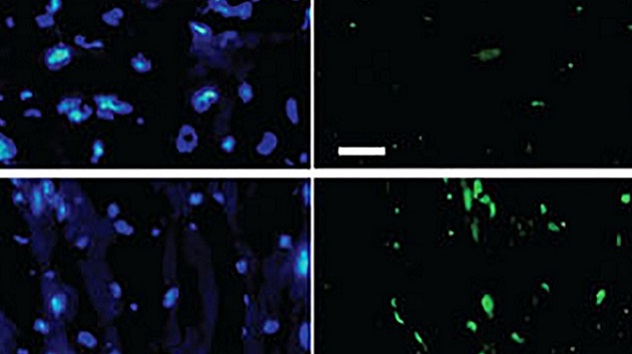
This image from our lab shows Nrf2 nuclear translocation in donor hearts after histone deacetylase inhibition. Purple and pink cultured cells depict signaling pathways.
-
Advancing new options
This image from our lab shows subunit nuclear translocation during human heart preservation.
Overview
The Heart Failure and Transplantation Lab is a dynamic and highly collaborative team that seeks to make impactful discoveries and develop innovative therapies for conditions related to heart failure.
With new treatment methods, people with advanced heart failure can survive and even thrive. This is particularly important and urgent for people who need advanced therapies, such as heart transplantation or ventricular assist device implantation.
Under the direction of principal investigator Paul C. Tang, M.D., Ph.D., our lab team investigates the immunology and cell biology of donor organ preservation and cardiovascular aging. We're developing new and unique biotechnologies to improve donor heart performance, reduce rejection after transplant, and improve outcomes in heart transplant and mechanical circulatory support.
Our research is aimed at helping people with heart failure by driving scientific discoveries into clinical practice. We have numerous ongoing research studies related to donor hearts, the transplant process, heart valve diseases and left ventricular assist devices (LVADs). We also publish extensively in research journals and welcome research trainees into our lab.
About Dr. Tang
Dr. Tang is a cardiovascular and transplant surgeon at Mayo Clinic in Rochester, Minnesota. As a scientist, Dr. Tang is tackling the urgent need for new treatments for advanced heart failure to improve outcomes and survival. Read more about Dr. Tang.
Training opportunities
We're seeking highly motivated students and postdoctoral research candidates to join our lab.
Our trainees conduct lab tasks and work in the areas of heart failure, thoracic organ transplantation and cardiac preservation. Trainees conduct basic research to gain exposure to the clinical translational impact of our work. They help conduct patient-focused studies using institutional and national databases with a clinical outcomes research focus. Trainees also develop research hypotheses, design experiments, write manuscripts, and apply for intramural and external grant funding.
We encourage Ph.D. students to contact us about lab rotations and long-term research opportunities. College students and graduates and clinical residents and fellows are also welcome to inquire about potential research opportunities.